Choctaw Sour Cornbread

Perfectly combining the wholesomeness of cornbread with the flavor kick of sourdough, this Indigenous Choctaw dish is one of my all-time favorite foods. Unfortunately, few people make it these days. For the foodies out there, for the people into cultural revitalization, and for the people who are both, this uniquely Native American bread needs to be brought back as a regular to the dinner table, you'll be doing the world a favor.
Cornbread is one of the gifts that the Native American people of the Southeast gave to humanity. Choctaw people traditionally made a number of different kinds of cornbread. The elders of a century ago preferred the sour variety, specifically, one that was lightly sour, white-colored, and almost translucent. Many of the elders I talk to say that they miss the sour cornbread made by their grandmothers in years gone by. One of our elder friends from Bryan County remembered her grandmother's kitchen had a traditional clay cooking pot where she let her sour cornbread dough mature for baking. Until the recent efforts to revitalize traditional pottery, this is actually one of the last instances I've come across of a Choctaw chef using clay pottery in her food prep.
Cornbread caught on with the non-Native community enough to become a pillar of American Soul Food. The sour version never really did, which is strange to me because it is such a great food and not particularly hard to make in the standard kitchen. I'll give you a recipe for the Indigenous version of Choctaw sour cornbread first, and then tell you how we have adapted it to our kitchen over the past year or so.
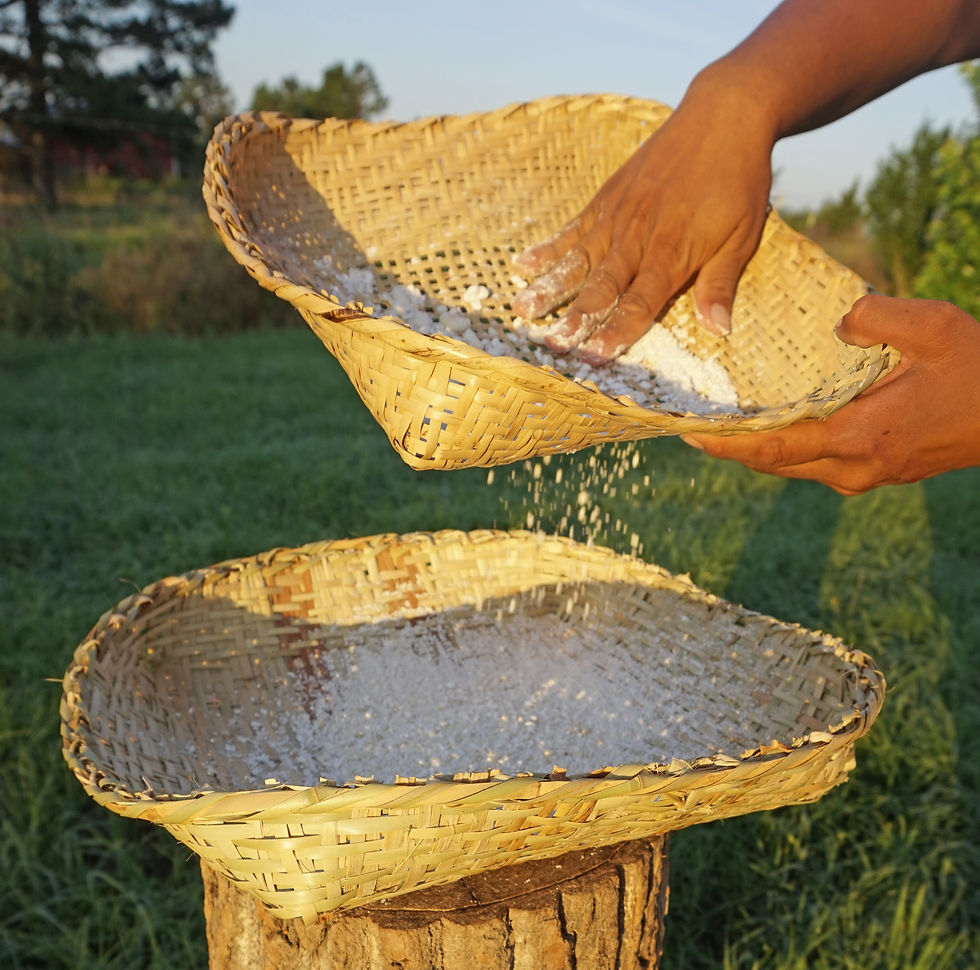
Indigenous recipe: The Choctaw flour corn, known as Tanchi Tohbi (literally White Corn), was the variety traditionally used for making bread. The seeds for this 17-ft-tall Choctaw heritage corn are available every spring through Choctaw Nation's Growing Hope Program. The dry kernels of flour corn were gently ground in a wooden mortar and pestle with a small amount of water until the husks loosened [This is tricky with the kernels of the Tanchi Tohbi variety that we have today. Send us an email before you try it]. A fanner basket was used to winnow away the loose husks. Then the corn was returned to the mortar and pounded. In the 1700s, cornbread was recognized as a treat in Choctaw communities because of how much work it took to grind the corn into flour. The corn would be ground until more than half of it had become cornmeal-sized particles. They would put this into a sifter basket held over a flat based. The meal would go through into the flat basket, while the larger pieces of corn would remain behind in the sifter. They would set the cornmeal aside and soak the larger pieces of corn in water overnight. The next morning, they would put the soaked fragments in the with dry cornmeal and add enough boiling water to make a stiff dough. The dough would be allowed to sit, covered, until it developed a fermented smell.

Traditionally, bread was cooked on a prepared clay hearth. First, the grass was burned off over an area a couple of feet in diameter. Next, a thin layer of soft clay was plastered over the warm ground. A fire was built on top to heat and harden the clay. Then, the coals were gently brushed to the side and the ashes blown off of the clay. The loaf was placed directly on the hot clay with a sizzle. A fired clay bowl was set over the loaf, and coals were packed around it, making a mini-oven. When done, the coals and bowl were removed and the loaf taken off of the clay hearth. Break cooked in this way has a crispy crust with a caramelized, almost popcorn-like flavor. The inside is soft and moist, like bvnaha.
I remember the first time I had sour cornbread (who wouldn't). It was made by an elder from Thlopthlocco Tribal Town, who had spent his life fighting for the United States and his community, first in the Vietnam War and later in the cultural resources field. Like most of the few people who make this dish today, he soaked white rice for the fermenting step. The recipe that we most often use in our kitchen goes back to just fermenting the cornmeal, itself
Here is that recipe kitchen: Mix cornmeal with boiling water in a large bowl and cover it with a cloth. Let it sit in a warm house for two days. It should be starting to have a fermented smell. As the corn dough ferments, it unfortunately looses most of the stickiness that the boiling water has imparted, but it is still possible to form it into a loaf with some care. We form a long, narrow loaf inside a Dutch oven. The narrowness makes it easier for the inside of the loaf to cook. We put the lid on the Dutch oven, slide it in the stove, and bake it at about 450 degrees. Soon, you can start to smell the most amazing sourdough scents coming from the oven. The key in cooking is to get the middle of the loaf done without burning the crust. Cooking time is going to depend on the dimensions of the loaf you've made, but 45 minutes is reasonable. Once done, we take the loaf out of the Dutch oven and allow it to cool on a backing rack. In my opinion, this sliced, warm, sour bread, truly is one of the best flavors in Choctaw cuisine. Made from cornmeal and water, its texture is, of course, different than wheat bread, more like a corn pone.
One of the best things about cornbread, is slicing it and frying it for breakfast the next morning. This can be done with sour cornbread as well. In my opinion, it's even better than the conventional fried cornbread.
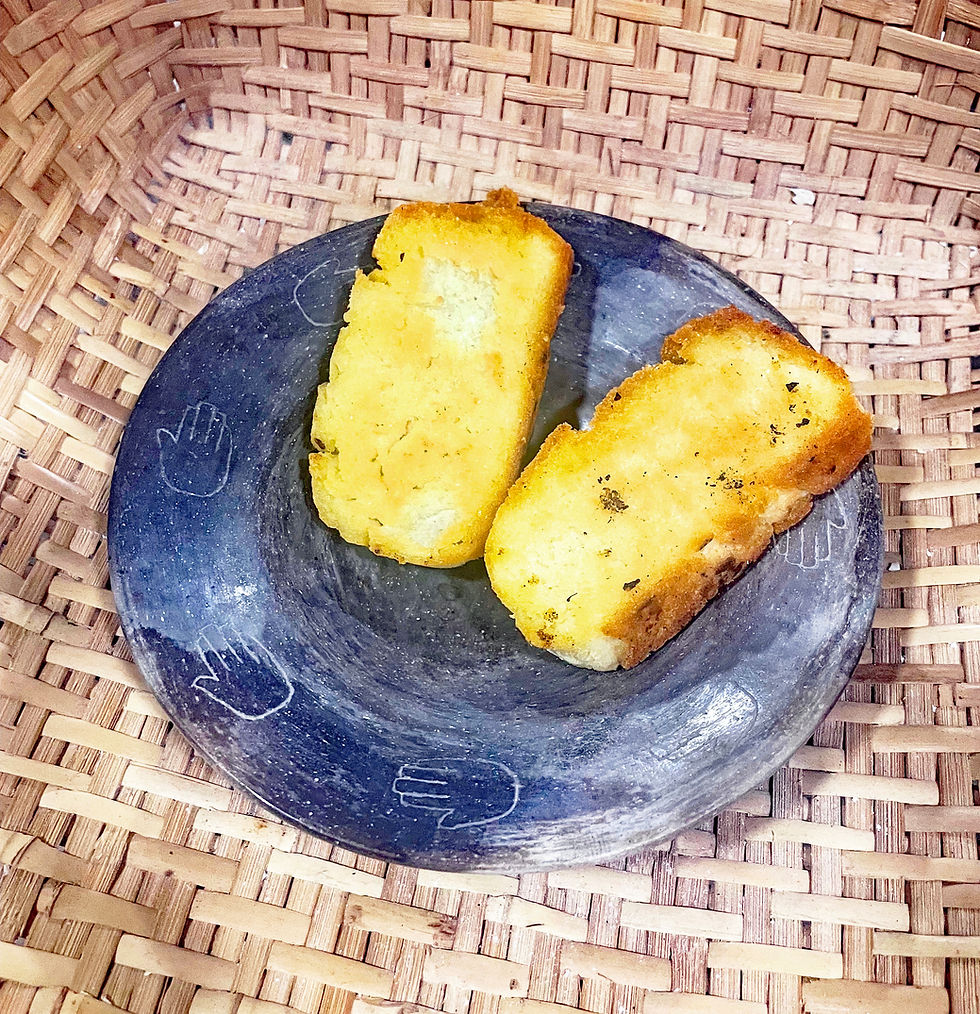
Like any food, it's fun to experiment with different ingredients in sour cornbread. I already mentioned the rice. We tend to focus on the traditional, but admittedly, some of the best experiments we have done involved mixing some wheat flour into the cornmeal, before you start the fermentation process. This makes the bread a little lighter and drier, more like the bread texture most people are used to, but it still preserves the great sour cornbread taste.
If you're interested in Indigenous food, the second edition of the Choctaw Food book is out. Donated to Choctaw Nation, the Tribe sells it at the Tvshkahomma Capitol Museum, Wheelock Academy Historic Site, and at the Cultural Center.


heyyy goodbye
hey